
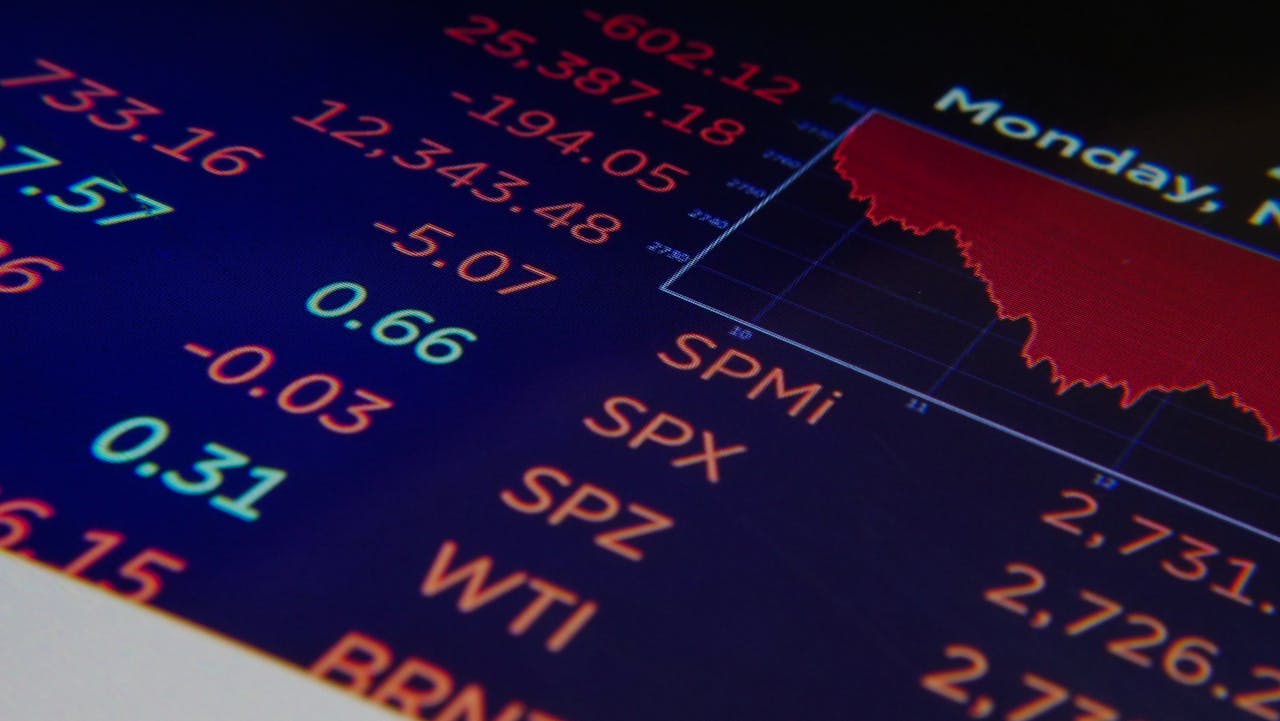
Economic indicators play a crucial role in shaping stock market performance. These indicators, which provide insights into the health and direction of an economy, are closely watched by investors, analysts, and policymakers.
The stock market, in turn, responds to these indicators, often leading to fluctuations in stock prices, investment decisions, and overall market sentiment. Understanding how economic indicators impact the stock market is key to making informed investment decisions and navigating financial markets.
Quick Recommendation: Explore our blog for valuable tips and resources on investing in stocks. Want to build a growing stream of passive income, regardless of what happens in the stock market? Check out the Road To Successful Investing - Stock Investing Guidebook:

What Are Economic Indicators?
Economic indicators are statistics that provide information about the economic activities of a country or region. These data points help analysts, businesses, and investors assess the strength of an economy and its future trajectory. Economic indicators can be broadly categorized into three types: leading, lagging, and coincident indicators.
- Leading Indicators: These indicators predict future economic activity. They typically change before the economy as a whole changes, providing early signs of potential economic trends. Examples include the stock market itself, building permits, and consumer confidence indices.
- Lagging Indicators: These indicators confirm trends that are already in motion. They usually change after the economy has already shifted, providing a retrospective view. Common lagging indicators include unemployment rates and inflation.
- Coincident Indicators: These indicators move in tandem with the economy. They provide real-time data about the state of the economy and are often used to assess economic growth. Key examples are GDP (Gross Domestic Product) and industrial production.
Key Economic Indicators and Their Influence on the Stock Market
Several economic indicators have a direct impact on stock market performance. These indicators can influence market sentiment, investor confidence, and the overall direction of stocks. Here are some of the most significant indicators that affect the stock market:
1. Gross Domestic Product (GDP)
GDP measures the total value of all goods and services produced within a country during a specific period. It is a key indicator of the economic health of a nation. A growing GDP suggests a healthy economy, which can lead to rising corporate profits, higher consumer spending, and increased investor confidence. As a result, stock markets tend to perform well when GDP growth is robust.
Conversely, when GDP contracts or grows at a slower pace, it often signals economic downturns, leading to a bearish stock market environment. Recessions, marked by declining GDP, often lead to market corrections or crashes as investors seek to protect their capital.
2. Inflation
Inflation is the rate at which prices for goods and services rise, eroding purchasing power. Moderate inflation is typically seen as a sign of a growing economy, but high inflation can be detrimental to stock market performance. Rising inflation often leads to higher interest rates as central banks raise borrowing costs to control price increases.
Higher interest rates can negatively affect stock markets because they increase the cost of borrowing for businesses, reducing corporate profits and consumer spending. Inflation also erodes the value of fixed-income investments, leading investors to shift capital into equities, which can drive market volatility.
3. Unemployment Rate
The unemployment rate is a lagging indicator that reflects the percentage of the labor force that is unemployed but actively seeking work. A high unemployment rate often signals a struggling economy, which can result in reduced consumer spending and lower corporate earnings. These factors can put downward pressure on stock prices.
On the other hand, a low unemployment rate is a sign of economic strength, as it indicates a high level of job creation and consumer confidence. This can boost stock market performance as businesses benefit from higher demand for their products and services. Additionally, lower unemployment levels can lead to wage growth, which further supports economic expansion.
4. Consumer Confidence Index (CCI)
Consumer confidence is a leading indicator that reflects the overall optimism or pessimism of consumers regarding their financial situation and the state of the economy. A high CCI typically signals that consumers feel secure in their financial well-being and are more likely to spend money, driving economic growth and boosting corporate earnings. This positive sentiment can translate into higher stock prices.
A declining CCI, on the other hand, can indicate that consumers are worried about the economy, which often results in reduced spending and lower corporate profits. In such times, investors may become more cautious, leading to a downturn in the stock market.
5. Interest Rates
Interest rates, set by central banks like the Federal Reserve in the U.S., play a pivotal role in the stock market. Low interest rates stimulate economic activity by making borrowing cheaper for businesses and consumers. This can lead to increased investment, higher consumer spending, and a positive outlook for stocks. As a result, stock markets generally perform well during periods of low interest rates.
Conversely, when central banks raise interest rates to combat inflation or prevent an overheating economy, borrowing becomes more expensive, and consumer spending and business investment may slow down. This can negatively affect stock market performance, especially in sectors that rely heavily on debt, such as real estate and technology.
Quick Recommendation: Explore our blog for valuable tips and resources on investing in stocks. Want to build a growing stream of passive income, regardless of what happens in the stock market? Check out the Road To Successful Investing - Stock Investing Guidebook::

6. Stock Market Performance as an Economic Indicator
The stock market itself is often viewed as a leading economic indicator. Investors make decisions based on their expectations of future economic conditions, and stock prices can reflect anticipated trends before they are evident in other economic data. A bull market, characterized by rising stock prices, often signals optimism about economic growth, while a bear market suggests concerns about economic contraction.
Stock market performance can influence other economic indicators as well. For example, a strong stock market can increase consumer wealth through rising asset values, leading to greater consumer spending. Conversely, a falling stock market can reduce household wealth, resulting in lower consumption and a potential economic slowdown.
7. Retail Sales
Retail sales data reflects consumer spending patterns and is a coincident indicator of economic health. When retail sales rise, it suggests that consumers are confident and willing to spend, which supports the broader economy and can lead to higher stock prices. Retail sales declines, however, signal reduced consumer demand, which can negatively affect corporate earnings and lead to a downturn in the stock market.
8. Manufacturing Index (PMI)
The Purchasing Managers’ Index (PMI) measures the economic health of the manufacturing sector. A PMI above 50 indicates expansion, while a PMI below 50 signals contraction. Strong manufacturing activity often correlates with economic growth, higher employment levels, and rising stock prices. A declining PMI, on the other hand, can signal a slowdown in economic activity, which can lead to a decrease in investor confidence and a pullback in stock market performance.
The Complex Relationship Between Economic Indicators and Stock Markets
While economic indicators provide valuable insights into the health of an economy, their influence on the stock market is not always straightforward. Stock prices can be affected by a combination of factors, including corporate earnings, geopolitical events, and investor sentiment. Furthermore, the timing of the release of economic data and its interpretation by market participants can create volatility in the stock market.
For example, a report showing strong GDP growth may initially boost stock prices, but if inflation is also rising at a rapid pace, investors may fear that the central bank will hike interest rates, which could dampen the economic expansion and put downward pressure on stocks. This illustrates the importance of analyzing economic indicators in context, rather than in isolation.
Conclusion
Economic indicators play a significant role in determining stock market performance by providing investors with critical insights into the direction of the economy. While there is a clear connection between indicators like GDP growth, inflation, interest rates, and stock prices, the relationship is complex and can be influenced by a wide range of factors.
Investors must carefully monitor and interpret economic data to make informed decisions, as economic conditions directly impact the profitability of businesses, investor sentiment, and ultimately, stock market performance. Understanding these dynamics can help navigate the ever-changing landscape of financial markets.
Quick Recommendation 2: Explore our blog for valuable tips on investing in shares. Want to build a growing stream of passive income, regardless of what happens in the stock market? Check out the Simply Investing Approach: